We spent some time studying the customs and culture of our people. Today, we will discuss something that many of you like the most. We will talk about a great war in the East, and the bizarre circumstances that lead to its breakout. It starts surprisingly calmly…
***
Dally, year 815 of Era II
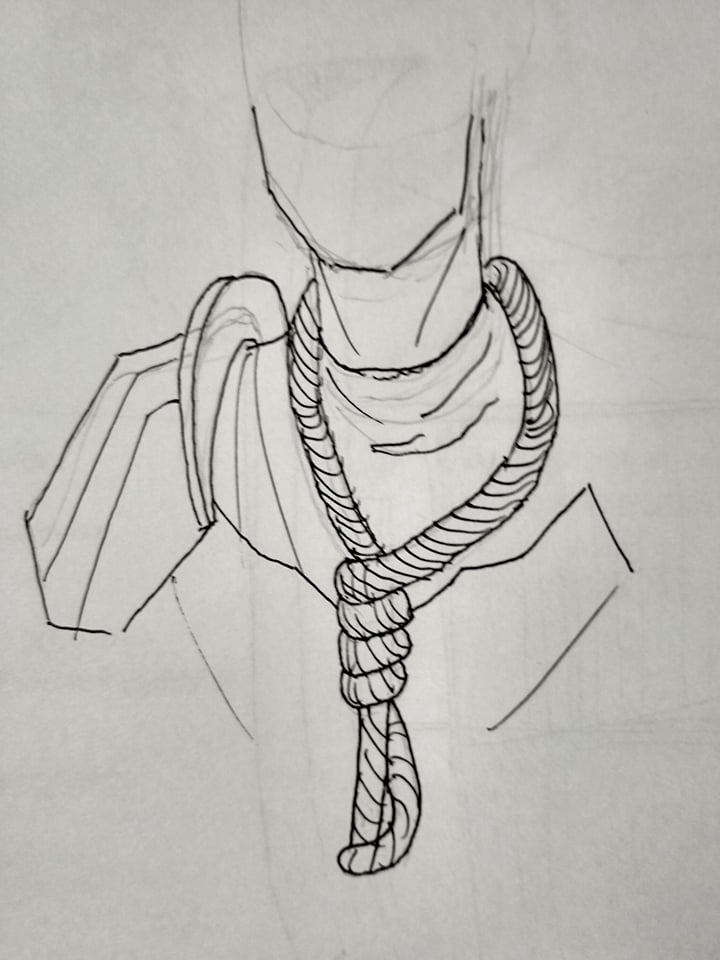
Every ruler needs some insignia that would match their power and show it to the people on every occasion. Kings of the Cape were no exception to that. Among all their royal symbols, one was clearly supreme, perhaps as respected as the King himself: the Purple Rope. It has a long history – the first known leader to wear it, hanging on the neck and attached to the chestplate, was Carthen the Savage, one of the Generals, credited with creating settlements and government on the Capes. The Rope was then used by all rulers on festivities and important public receptions, and for the remainder of the time it was displayed in the royal castle along with other regalia. This way, the power of the King was shown to the people practically all of the time. Seemingly, it was a perfect solution – until one night.
On an otherwise normal day, king Nyther III awoke to the most horrendous of views, at least for a king of the Cape. The Rope – on the evening before hung evenly, with merely a single knot needed to hold its shape – was lying on the floor in a messy state. He tried to get it back in order by himself, and then asked a few of his servants for help. Nyther himself left no written account of that event, but one of the servants later admitted in his journal that the Rope ‘was the greatest mess one could possibly make with a rope, looking like a futile attempt to make a braid on one end and a noose on the other’. It was only a few hours later that the king managed to summon a rigger, who had restored the item to its original state by the evening.
But Nyther could not stop there. The disrespect that had been done to him demanded justice – and for him, it only meant blood. All detectives in the capital were immediately directed to the case. They conducted a widespread and brutal investigation – anyone who could be even remotely connected to the incident was interrogated, and many of them were severely damaged when they failed to provide answers, even if it was out of genuine ignorance. Finally, it brought a result – the main suspect was a merchant from Edae, a neighboring kingdom. The king did not care about a due process, and neither would he simply execute the man. Instead, he sent a letter to Edae, saying, ‘You dared to touch the Rope, and on a rope you shall hang. Prepare to fight, for we shall strike soon. You have fifteen days, and then rage worthy of Carthan shall hit you.’
And so it did. Despite the granted time, Edae could not prepare its defenses well, and the country suffered greatly from the first, two-month-long campaign. Then, the army of the Cape stopped, but it was already borrowed time for Edae, and little rebuilding and restructuring happened. The Cape would keep stinging different parts of the country, with the only thing stopping them from launching the lethal strike being ominous overgrowth.
After over three years of fighting, new hope would appear for Edae. The country’s remaining army managed to ambush a large unit of the attacking army, suffering little loss in the process. It seemed as if the war had turned in their favor. The army of the Cape withdrew from many regions, but refused to surrender. For a year and a half, there was very little fighting. But then, Nyther decided to go all out. He regrouped all his soldiers into a single army and led a grand march towards Edae’s capital. What Edeans could do in the jungle, they couldn’t in the city – the Cape besieged the Hold, ironically named after another Nyther. The fortified city held for several months, but eventually, it surrendered to the holder of the Purple Rope.
This event, known for posterity as the War in the Bay, initiated a new era for the region – Nyther united all the lands on the two capes, creating for the first time the Kingdom of Both Capes. Even though Nyther was bloodthirsty until the end of his days, life under his reign was quite good – at least for those who did not interrupt his plans. But most importantly, he left a nation that could prosper in the difficult terrain of the Capes.
That’s all for now.
 Aedilër