Welcome back, and let us begin. A historian cannot just be aware of the great battles and prominent rulers. It is equally important that he knows about the life and customs of ordinary people. And that’s what I am going to explain today. More specifically, we will talk about clothes. The story begins long ago…
***
Eastern Aedilër, early Era II
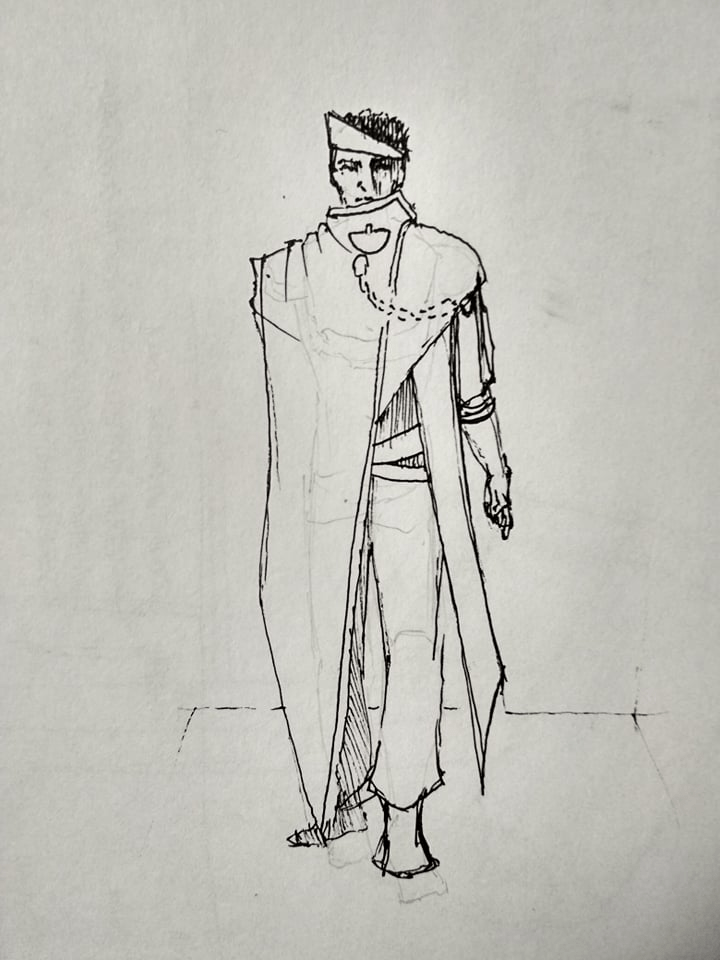
There are multiple features that distinguish an Eastman from other folks of the Continent. When clothing is concerned, one of them is especially prominent – the capes. You can still see them on many occasions, including not long ago, when the Institute inaugurated your studies.
Obviously, the tradition of wearing capes was born many centuries earlier. In fact, it is still not certain where exactly it comes from. It is not easy to trace the custom – it had existed for long when the Generals arrived in Aedilër, so it originates from the Twelve Islands, and the oldest documents that have been found only indicate the tradition is very old, but give no clue to its origin.
There are, however, legends surrounding the issue. The first of them is older. It says that ages ago, in one of the Islands, there was a huge wolf – so large and powerful that it could not only hunt animals, but also kill children, and at times even adult people. Many tried to kill it, but the attempts were always futile, and usually ended in the death of the hunters. But one day, it changed. A mysterious man appeared in one of the villages on the island. He was a complete stranger, and nobody could tell where he came from or who he was. The man offered to slay the great wolf, and expected nothing in return. The hunt was long, and ended with a fierce fight. Finally, the man returned to the village, with the wolf’s hide over his shoulders. The village folk welcomed him as a hero, and wanted to make him their leader. Unfortunately, he was badly wounded after the fight, and died of his injuries a few days later. To honor him, some men and women started to wear animal hides on their shoulders, just like the hero on his glorious return. After some time, people of other villages heard about the events and decided to do the same.
The other legend takes place in a city of the archipelago. There, a party left for the forest to hunt for large game. However, they were not very successful, and had only killed a few small animals by afternoon. One of the hunters heard a strange sound, and went towards it. Soon, he realized that he had gotten lost. After wandering for some time, he stumbled upon a mighty stag lying dead in the brushes, with no hint of what killed it. When the hunter saw it, he heard a voice saying: I am Searan, the bringer of prosperity. Take the hide of this animal, wear it, and then tell my word to the people of the town. You will all be blessed. The hunter did what the god told him to and returned to the city, spreading the message to everyone he encountered. A few months later, the city was blessed with a bountiful harvest, and the people thanked Searan. Many of them would put hides on themselves to show their gratitude for the message he sent.
We don’t know if any of these stories is true, but it is certain that the tradition bears some relationship to hunting and hides. It flourished in Eras I and II, giving rise to a great variation in the design of the capes. The wealthy would try to replicate the legend as exactly as they could, often paying great prices in order to get a perfect long hide cape. Most people would decide to wear simpler versions, made of leather or plant fabric. The poor, who also wanted to follow the custom, wore capes made of weak canvas, and at times improvised by using animal hair, straw or grass. Size also varied – the wealthiest wore ample capes that would cover their whole body and reach the ground, while simple farmers would use ones that barely covered their shoulders and back.
Those who could afford it would often add advanced ornaments to their capes – including pins or chains of precious metal, dyed bands and complex embroideries. The most beautiful ones would belong to emperors. These were often works of art, developed by tailors and jewellers over several months. The end product was impressive – it was always the best hide in the Empire, linked with a golden chain in front, and ornamented with diamond pins, as well as other additions, depending on the ruler’s will.
Later, the capes started to become simpler and more uniform. As you can see, nowadays most of them are simple fabric ones, and only royalties or important officials wear more ornamented ones.
That’s all for now, thank you.
 Aedilër