Welcome back. Today we shall discuss a topic perhaps less famous, but as captivating as others. Namely, we will talk about the history of Eastern technology, and in particular – boats and ships. It will be a long story…
***
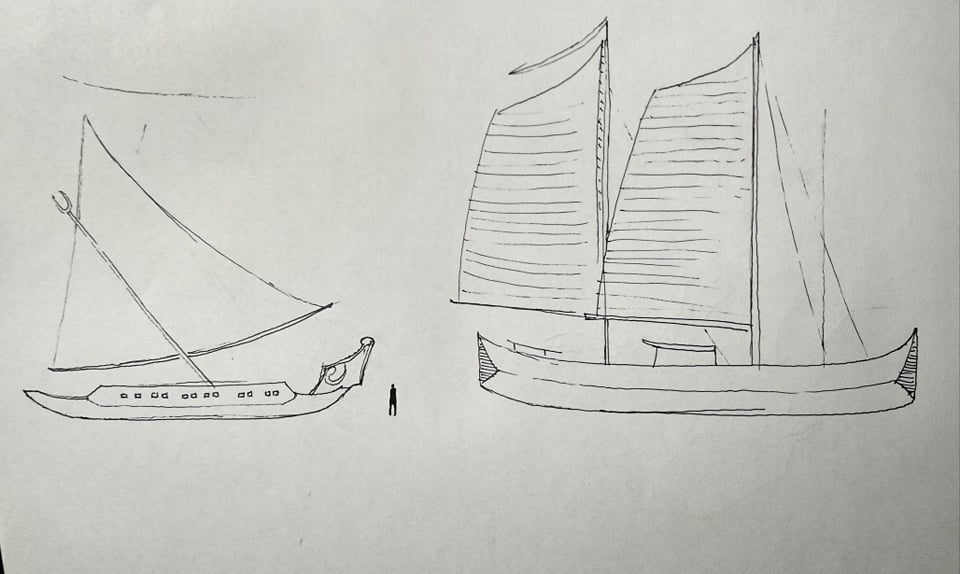
Being a nation born of water, Eastmen would always have a special affection for the sea. Our earliest ancestors inhabited the Twelve Islands, so the need to construct floating devices was basic for them. Initially they would build small wooden canoes or sailboats, but in a matter of centuries, as the amount of people and wares to transport between islands grew, they learned to construct mighty cargo ships with as many as five masts and swift two-hulls that could go many dozens of miles a day. Eventually, sailing became the central part of their lives. The Islands united under the Grand Admiralate, and highest posts in the fleet were a feat more important than any in the army, academia or clergy. By late Era I, the Admiralate would dominate the seas, with trade routes open with many small nations of the ocean, as well as organized patrol and exploration networks.
What was a blessing for the Islands became a curse for the Continent. As you should know well, the Three Generals all reached Aedilër on great ships, only to be abandoned forever on an undiscovered land. They persisted, and by their deaths – perhaps except the tragic passing of General Rayoh the Crazy – they had created a flourishing colony. The story of the arrival was, however, still well alive in the memories of the people. And so, they showed reluctance towards any kind of vessel. Fishers and some traders would still use small rowing or sailing boats for their work, but for many centuries – most of Era II in fact – no major ships were in use.
Only in the late part of the era, as trade with the South and the Rift grew, people of the East decided to develop new ships. What they built was not a reproduction of the old Islander ships – instead, they created novel designs, much lighter than the ancient ones, bearing no more than two masts, and incorporating more advanced elements, most importantly jibs. This design allowed greater efficiency in the conditions of the Continent and provided great progress to the two Eastern countries and the city of Aggermaille.
In Era III, the negative sentiment towards sailing had passed completely. Men of the East had understood well the opportunities presented by marine trade, including one with the Twelve Islands that had rejected them ages earlier. Engineers would invent new solutions to make the ships faster and allow them to carry more goods without disturbing their original character, creating a great variety of designs. In that period, there were multiple experiments with magically enhanced ships, but they were rejected due to their long-term inefficiency. Era IV, with its great advancement in technology, saw the birth of ships powered by machines, which were another major advancement.
Sea trade is still an important part of our economy, and will probably remain so for many centuries more. Thank you, that’s it for today.
 Aedilër